For candle makers
Starting a Candle Business in the USA: Wax, Safety Rules, Certifications and Manufacturer Data for Makers
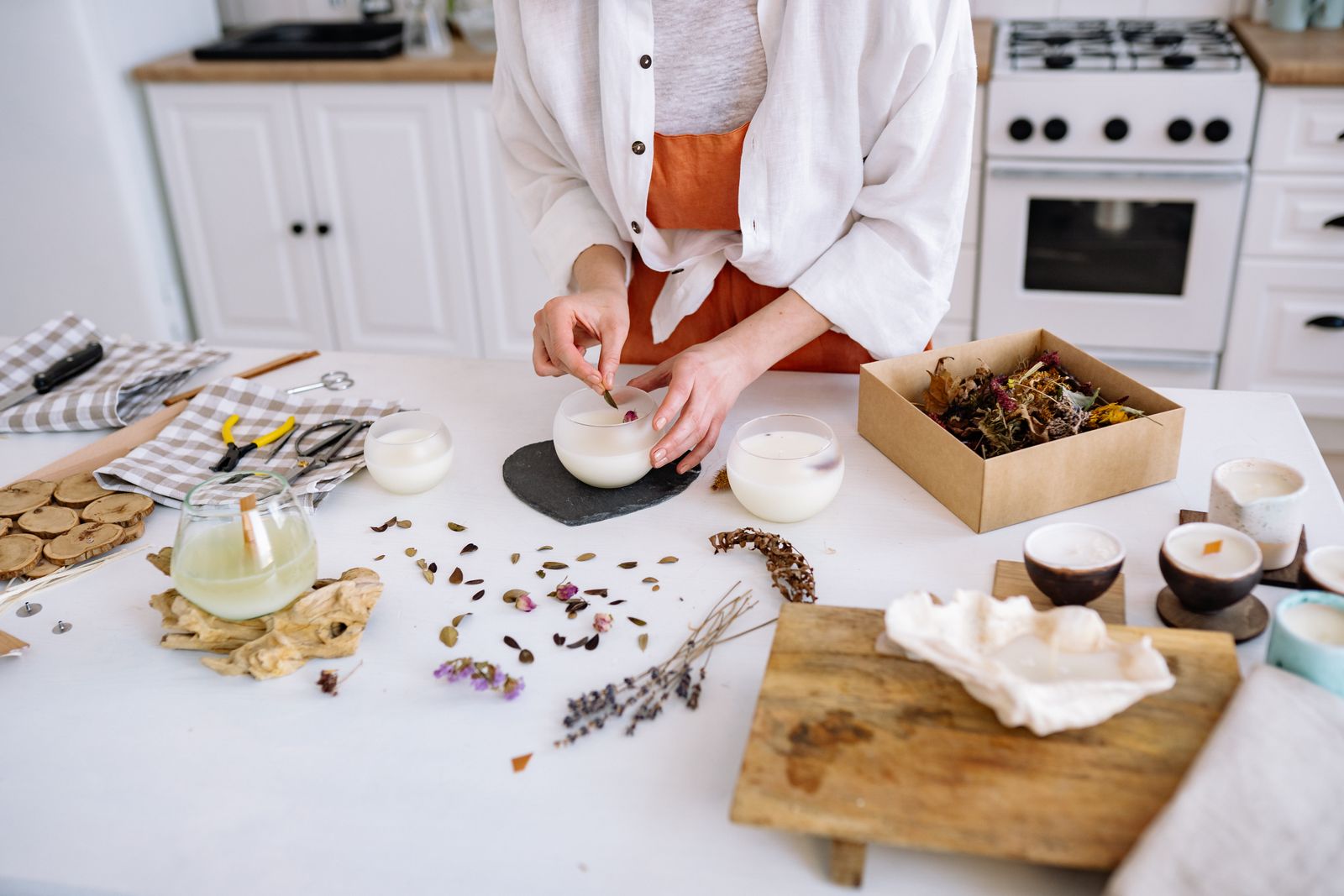
Starting a US candle business means layering ordinary small-business steps — an EIN, a sales-tax permit, a local business license — on top of candle-specific federal rules: the CPSC's 0.06%-lead cap on metal-cored wicks (16 CFR § 1500.17(a)(13)), the voluntary-but-effectively-required ASTM F2417 and F2058 fire-safety standards, and IFRA's fragrance-concentration ceilings. From there, sourcing decisions — which wax to pour, whether to hand-pour or use a private-label manufacturer, which certifications to pursue — shape cost and positioning more than any single regulation does. This guide is built from the same 100-maker, 32-state dataset behind the rest of this directory, so the numbers below describe what US makers are actually doing, not just what the rules say to do.
What this guide draws on
Everything below is either a cited federal rule, a voluntary industry standard, a fact published on a manufacturer’s own site, or a number pulled directly from this directory’s own 100-maker, 32-state dataset — never a ranking, a recommendation, or an editorial “best.” Candles of USA doesn’t manufacture, wholesale or private-label candles, has no financial relationship with any company named on this page, and applies the same rule here it applies everywhere else on the site: no ratings, no paid placement, sources and a last-verified date on every claim.
Registering the business
A candle business doesn’t need a candle-specific license — it needs the same paperwork any small manufacturer needs. In outline:
| Step | What it is | Typical cost |
|---|---|---|
| Business structure | Sole proprietorship (simplest) or LLC (separates personal and business liability) | Filing fees vary by state |
| EIN | Free federal tax ID from the IRS, needed to open a business bank account and buy from wholesalers | Free |
| Sales tax permit | State-level registration to collect and remit sales tax | Usually free to low-cost |
| Local business license | City or county general business license; check zoning first if operating from home | Roughly $50-$200 |
| Home occupation permit | Required in many jurisdictions to run a manufacturing business (even a small one) from a residence | Varies by city/county |
None of these steps are unique to candle-making — they’re the standard on-ramp for any small product business, and the exact cost and order varies enough by state and city that the SBA’s own local office is the most reliable place to confirm what applies to a specific address, rather than a generic guide.
Federal safety rules a candle maker actually has to meet
This is the part that is candle-specific, and it comes from four different sources that don’t always announce themselves in the same place:
| Rule | What it requires | Mandatory? | Source |
|---|---|---|---|
| CPSC lead-wick ban | Metal-cored wicks capped at 0.06% lead by weight of the metal core; container must state “Conforms to 16 CFR 1500.17(a)(13)” | Yes — federal law since Oct. 15, 2003 | 16 CFR § 1500.17(a)(13) |
| ASTM F2417 | Fire-safety performance: flame height limits, container stability testing | Voluntary, but required by most wholesale buyers and marketplaces in practice | ASTM, updated 2023 |
| ASTM F2058 | Fire-safety warning-label wording, format and placement | Voluntary, same practical effect as F2417 | ASTM |
| FHSA / FPLA | Federal packaging and hazard-labeling law covering household products generally | Yes — federal law | Federal Hazardous Substances Act, Fair Packaging and Labeling Act |
| IFRA fragrance standards | Maximum safe concentration per fragrance material, by product category | Industry self-regulatory; suppliers issue certificates | International Fragrance Association |
The lead-wick rule is the one with an exact, checkable number: no more than 0.06% lead by weight in the metal core, full stop, on anything manufactured or imported since October 2003. The ASTM standards are technically voluntary, but calling them optional is misleading in practice — a maker who can’t produce F2417/F2058 documentation on request routinely gets turned away by wholesale buyers and marketplace sellers, which is the same practical effect as a mandatory rule without being one on paper.
IFRA works differently: it doesn’t set a single “safe percentage” for candles generally. Fragrance suppliers test individual materials and publish a maximum usage level for each one under IFRA’s Category 12 (products not intended for direct skin contact, which includes candles), and issue an IFRA certificate stating that ceiling. Most working candle formulas land in the 5-12% fragrance-oil range by wax weight — below the IFRA ceiling in most cases, and capped in practice by what the wax itself can hold before scent throw or texture suffers.
Choosing a wax to pour
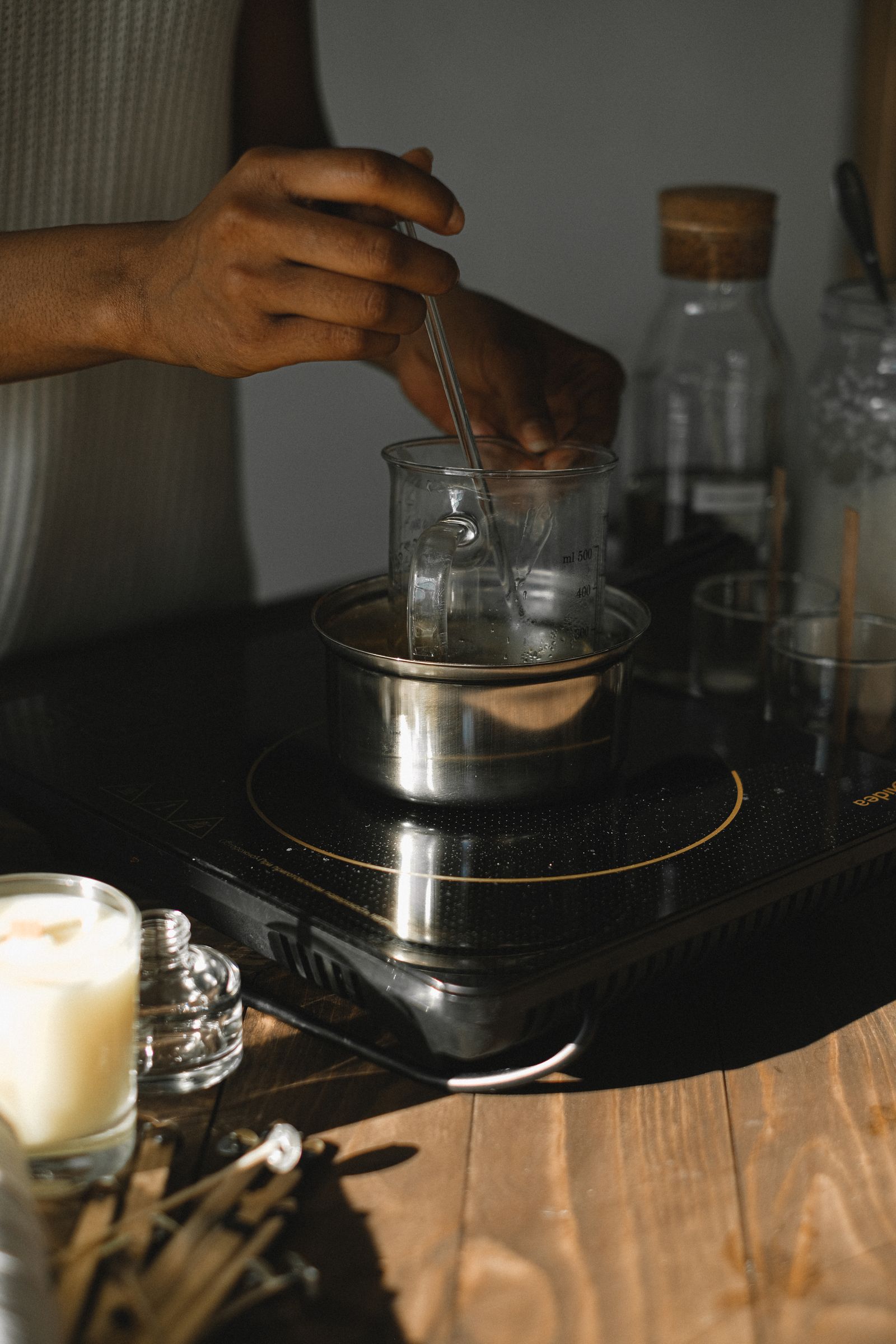
This is the same underlying comparison as this directory’s wax types guide, reframed around what a maker is optimizing for rather than what a buyer should shop for:
| Wax | Fragrance load | Cost tier | Best suited to | Share of 100 US makers on record |
|---|---|---|---|---|
| Soy | 6-10% | Low-mid | Container candles, cleanest cost/fragrance balance | 65% |
| Blend | Varies by mix | Varies | Combining a base wax’s structure with another’s burn or scent traits | 44% |
| Paraffin | 10-12% (highest) | Lowest | Maximum scent throw, heritage/legacy product lines | 13% |
| Beeswax | 3-5% (lowest) | Highest | Longest burn time per ounce, minimal added fragrance | 13% |
| Coconut | 8-11% | High | Smooth texture and strong fragrance retention, usually blended for structure | 12% |
| Rapeseed | Not separately quantified | Mid (Europe) | Low-soot burn; effectively unestablished in the US market so far | 0% |
(Percentages don’t sum to 100 — makers pouring more than one wax type are counted in each column that applies.) Cost, fragrance-holding capacity and structural stability trade off against each other in every wax on this list; there’s no single right answer, which is exactly why 44 of the 100 makers here pour a blend rather than one wax alone.
Certifications a small candle brand can actually earn
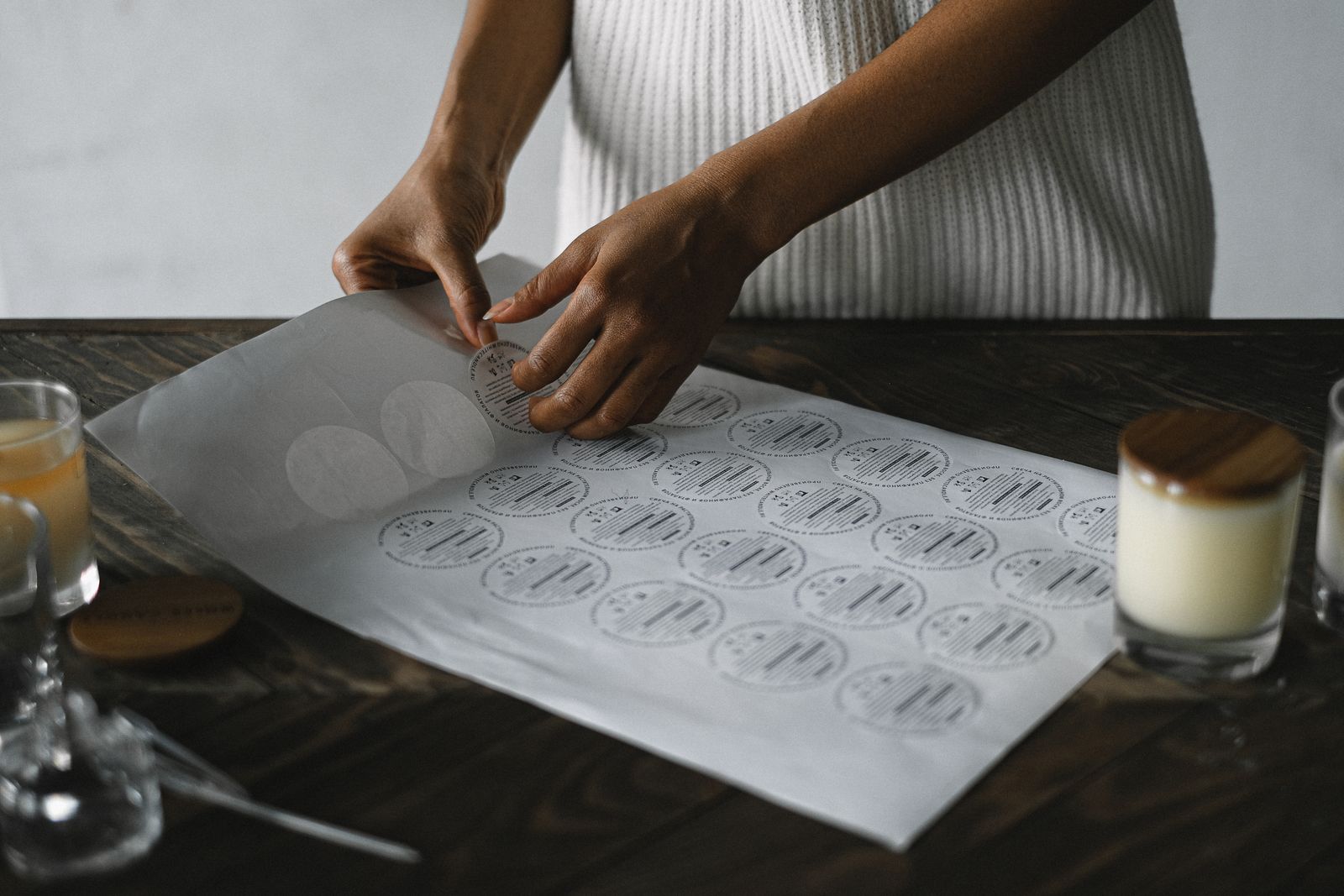
Some of the certification claims candle buyers see on packaging are formal, third-party-audited programs; others are self-declared supplier statements. Both are legitimate — they’re just different kinds of claim, and it’s worth a maker knowing which is which before printing a label:
| Certification | What it actually requires | Formal certifying body? | Held by, of 100 makers on record |
|---|---|---|---|
| Family-owned | Self-declared ownership structure | No | 14 |
| Phthalate-free | Supplier declaration that the fragrance oil contains no phthalates | No independent test; supplier-level claim | 11 |
| Woman-owned | 51%+ ownership and control by a woman/women | Yes, if pursuing the federal WOSB program via SBA | 10 |
| Vegan | No animal-derived ingredients across wax, fragrance carriers, dye and wick components | Varies — some use third-party vegan certifiers, most self-declare | 7 |
| Lead-free wick | No lead in the metal wick core beyond the legal 0.06% threshold | Legally required baseline, not really an optional “certification” | 5 |
| Cruelty-free | No animal testing on the finished product or ingredients | Yes, if pursuing Leaping Bunny or a similar third-party program | 5 |
| Paraben-free | Supplier declaration that fragrance oil contains no parabens | No independent test; supplier-level claim | 3 |
| Veteran-owned | 51%+ ownership and control by a veteran | Yes, via SBA’s VOSB program | 0 |
| B Corp | Verified social/environmental performance, accountability and transparency standards | Yes, via B Lab | 0 |
Two rows are worth a maker’s attention specifically: veteran-owned and B Corp are the only two certifications in this table that currently have zero holders among the 100 makers this directory tracks — not because no eligible makers exist, but because neither has an obvious foothold in this dataset yet. Both run through a real, applyable federal or third-party program (SBA’s veterans.certify.sba.gov, and B Lab’s own assessment for B Corp) rather than a self-declared label, which is also true of the WOSB program behind the “woman-owned” claim held by 10 makers here.
Private-label and contract candle manufacturers in the USA
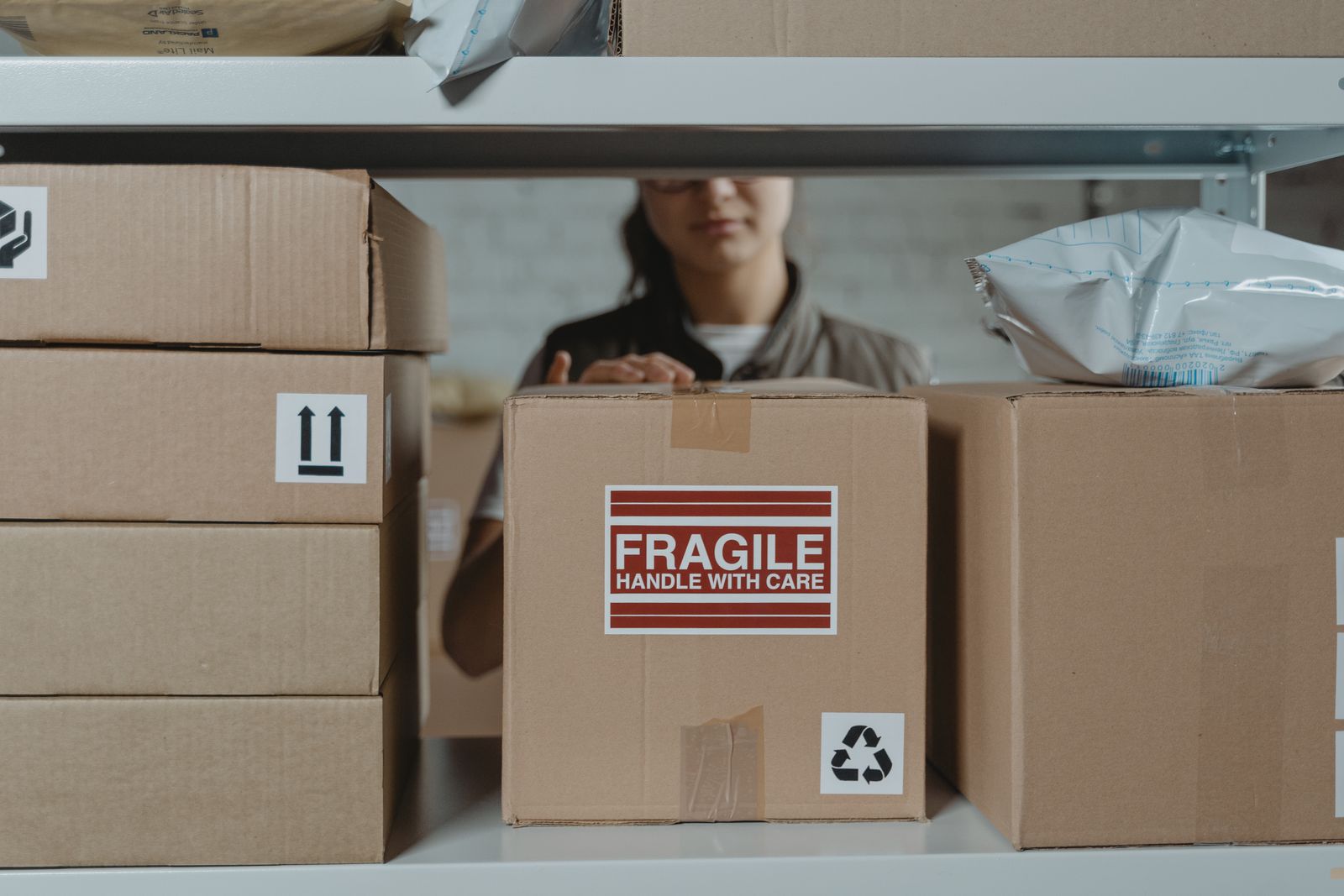
Not every maker wants to hand-pour their own inventory. Five US-based manufacturers publish private-label or contract-manufacturing programs on their own sites, listed below by minimum order size — smallest first, the same non-editorial ordering rule this directory uses everywhere:
| Manufacturer | Location | Minimum order | Typical lead time |
|---|---|---|---|
| Lumient | Los Angeles, CA | 12 units (wholesale) / 120 units (private label) | ~5 days average |
| Velavida | Richardson, TX | 12 units (ready-made) up to 10,000+ (custom programs) | Not separately published |
| Ella B. Candles | Charlotte, NC | 25 units | 2-3 weeks |
| Laguna Candles | California (woman-owned) | 150 units (standard), 250 for custom-printed boxes | 21-30 days (as of Nov. 2025) |
| Prosperity Candle | Western Massachusetts | 250 units (opening order), lower on reorders | ~3 weeks |
This is a factual list, not a recommendation — Candles of USA has no relationship with any of these five companies, doesn’t earn a commission from them, and hasn’t evaluated their output. Minimums, pricing and lead times change; confirm current terms directly with the manufacturer before ordering. A maker choosing between them is really choosing between two different things: private label (a brand name and packaging applied to a manufacturer’s existing recipe and vessel, generally the lower-minimum option above) versus contract or custom manufacturing (a formula built to the maker’s own spec, generally the higher-minimum, higher-customization end of this table).
Timing an order around seasonal demand
The National Candle Association puts roughly 35% of annual US candle sales inside the Christmas/holiday season alone. Set against the lead times above — 5 days at the fast end, 3-4+ weeks at the slow end — a maker planning a holiday private-label run needs to place that order well before October, not after Halloween, if a 3-week (or longer) manufacturer is involved. The same logic applies to any other seasonal spike: work backward from the release date using the slowest lead time on the list above, not the fastest.
Where American candle makers actually are
Sourcing and networking both work better with a sense of who else is pouring candles nearby. Across the 100 makers this directory currently tracks in 32 states, the states with the most on record are:
| State | Makers on record |
|---|---|
| New York | 10 |
| Pennsylvania | 8 |
| Ohio | 7 |
| California | 7 |
| Minnesota | 6 |
| Texas | 5 |
| North Carolina | 4 |
| Michigan | 4 |
| Maryland | 4 |
| Massachusetts | 4 |
This is a count of makers catalogued in this directory specifically, not a census of the entire US candle industry — treat it as a starting point for finding nearby makers, wholesale contacts or shared suppliers, not a ranking of which states make the most candles. Every state with at least one recorded maker has its own page at /states/, each listing wax types, certifications and city where published.
Sourcing and verifying claims the way this directory does
The discipline behind this page is the same one behind every brand and candle record on this site, described in full on the methodology page: every factual claim carries a source URL and a last-verified date, records stay marked “awaiting verification” until a person has actually checked them against a public source, and nothing here is rated, scored or ranked — including the manufacturer table above, which is ordered by minimum order size for exactly that reason. A maker building their own supplier claims (certifications, sourcing, “made in the USA”) can borrow the same three habits directly: cite the source for every claim on a label, note when it was last checked, and keep self-declared claims (phthalate-free, family-owned) visibly distinct from third-party-audited ones (WOSB, Leaping Bunny, B Corp).
A few makers, by scenario
Not a ranking — five real, differently-positioned examples pulled from this directory’s records, to show how the choices above play out in practice, listed alphabetically by state:
| Maker | State | Approach |
|---|---|---|
| Boy Smells | CA | Coconut-and-beeswax blend; phthalate-free, vegan and cruelty-free certifications all recorded |
| Bluecorn Candles | CO | Runs two separate lines — a vegan coconut-wax line and a separate pure-beeswax line — rather than blending the two |
| Aarka Origins | NC | 100% soy, hand-poured; phthalate-free, vegan, cruelty-free and lead-free-wick certifications recorded, woman-owned |
| Candle-Lite Company | OH | Manufacturing since 1840; currently sells a paraffin-soy blend line alongside separate all-soy lines |
| Bee Hive Candles | WA | 100% pure beeswax sourced from US hives, no blending |
Full sourced records for each — city, founding year, price range, every certification on file — are on their own brand pages.
Something on this page wrong, out of date, or missing a manufacturer/certification that should be here? Tell us and we’ll correct it.
Makers featured in this guide
Related states
Frequently asked questions
How do I start a candle business in the USA?
Register the business (sole proprietorship or LLC), get a free EIN from the IRS, and apply for a state sales-tax permit plus any required local business license, which typically runs $50-$200 depending on the city or county. From there, candle-specific compliance takes over — the CPSC's lead-wick limit, ASTM's voluntary fire-safety standards, and FHSA/FPLA labeling rules, all covered below. Requirements vary by state and city, so a local SBA office is the most reliable place to confirm what applies to a specific address.
Do candle makers need FDA approval?
No. Candles fall under the Consumer Product Safety Commission's jurisdiction, not the FDA's, since they're a fire-producing consumer product rather than a food, drug or cosmetic. The relevant federal rules are the CPSC's lead-wick ban (16 CFR § 1500.17(a)(13)) and the labeling requirements under the Federal Hazardous Substances Act and Fair Packaging and Labeling Act.
What is the CPSC rule on lead in candle wicks?
Under 16 CFR § 1500.17(a)(13), a metal-cored candlewick's lead content, calculated as the metal, cannot exceed 0.06% of the total weight of the metal core — a rule that has applied to every candle manufactured or imported into the US since October 15, 2003. Candles shipped with compliant metal-cored wicks must also be labeled "Conforms to 16 CFR 1500.17(a)(13)" on the outer container.
Are ASTM candle safety standards mandatory?
Not legally. ASTM F2417 (fire safety) and F2058 (fire-safety labeling) are voluntary consensus standards, not federal law. In practice they function as a baseline anyway, since most wholesale buyers, retailers and marketplaces require documented compliance before listing a candle, and meeting them provides real protection if a product is ever involved in an incident.
How much fragrance oil can I put in a candle?
IFRA sets a maximum safety ceiling for each fragrance material under its Category 12 standard, which covers products with no direct skin contact, including candles — but that ceiling is a safety limit, not a target. Most candle makers use roughly 5-12% fragrance oil by wax weight in practice, and the wax itself caps what it can hold before it stops binding cleanly; an IFRA certificate from a fragrance-oil supplier states the maximum percentage that specific blend has been cleared for.
What wax should I use for a wholesale or private-label candle line?
There's no universally better choice: soy holds 6-10% fragrance oil and burns cool and long, coconut melts at the lowest point and usually needs blending for structure, beeswax burns longest per ounce but holds the least fragrance, and paraffin holds the most fragrance oil of the five. See this directory's wax-type comparison for the full spec table — of the 100 US makers recorded here, 65 pour soy in some form, more than any other type.
Are there private-label or contract candle manufacturers in the USA?
Yes. US-based options include Lumient (Los Angeles, 12-unit wholesale / 120-unit private-label minimum), Velavida (Texas, 12 to 10,000+ units), Ella B. Candles (North Carolina, 25-unit minimum), Laguna Candles (California, 150-unit minimum) and Prosperity Candle (Massachusetts, 250-unit opening minimum), each with its own pricing and lead time as published on its own site. Candles of USA doesn't manufacture candles, holds no relationship with any of them, and lists them by minimum order size, not by preference.
How do I get my candle business certified as woman-owned or veteran-owned?
Through the Small Business Administration's own certification portals — WOSB.certify.sba.gov for women-owned businesses and veterans.certify.sba.gov for veteran-owned businesses — which as of February 2026 replaced the older self-certification option for federal-contracting purposes. Neither certification is required to describe a business that way informally on packaging, but formal SBA certification is what actually qualifies it for set-aside federal contracts.
How do I get Leaping Bunny cruelty-free certified?
Leaping Bunny requires setting a fixed cut-off date after which neither the brand nor its suppliers may test on animals, building a supplier-monitoring system covering every raw-material source, collecting signed compliance declarations from those suppliers, and passing an independent audit, with annual recommitment after that. It's a supply-chain certification, not a product test, which is why this directory records "cruelty-free" as a stated brand claim rather than something independently verified.
How many candle-making businesses are there in the US?
One industry estimate puts the figure at roughly 1,852 candle-manufacturing businesses, averaging 4.7 employees each — a market of many small makers rather than a handful of large ones. Separately, the National Candle Association states its member companies alone represent about 80% of US candle production, so the true count of very small or unlisted makers is likely higher than either figure captures on its own.
Which US states have the most candle makers?
Among the 100 makers recorded in this directory across 32 states, New York currently has the most on record (10), followed by Pennsylvania (8), then California and Ohio (7 each) — a reflection of which makers have been catalogued here so far, not a claim about the entire US industry. See the state-by-state directory for the current full breakdown.
What's the difference between private label and contract candle manufacturing?
Private label typically means putting your brand on a manufacturer's existing recipe, vessel and fragrance menu with minimal customization; contract or custom manufacturing means the manufacturer produces to your own formula, usually at a higher minimum order and price. Several US manufacturers named above offer both tiers under the same roof, so the distinction is normally about how much is being customized, not two separate industries.